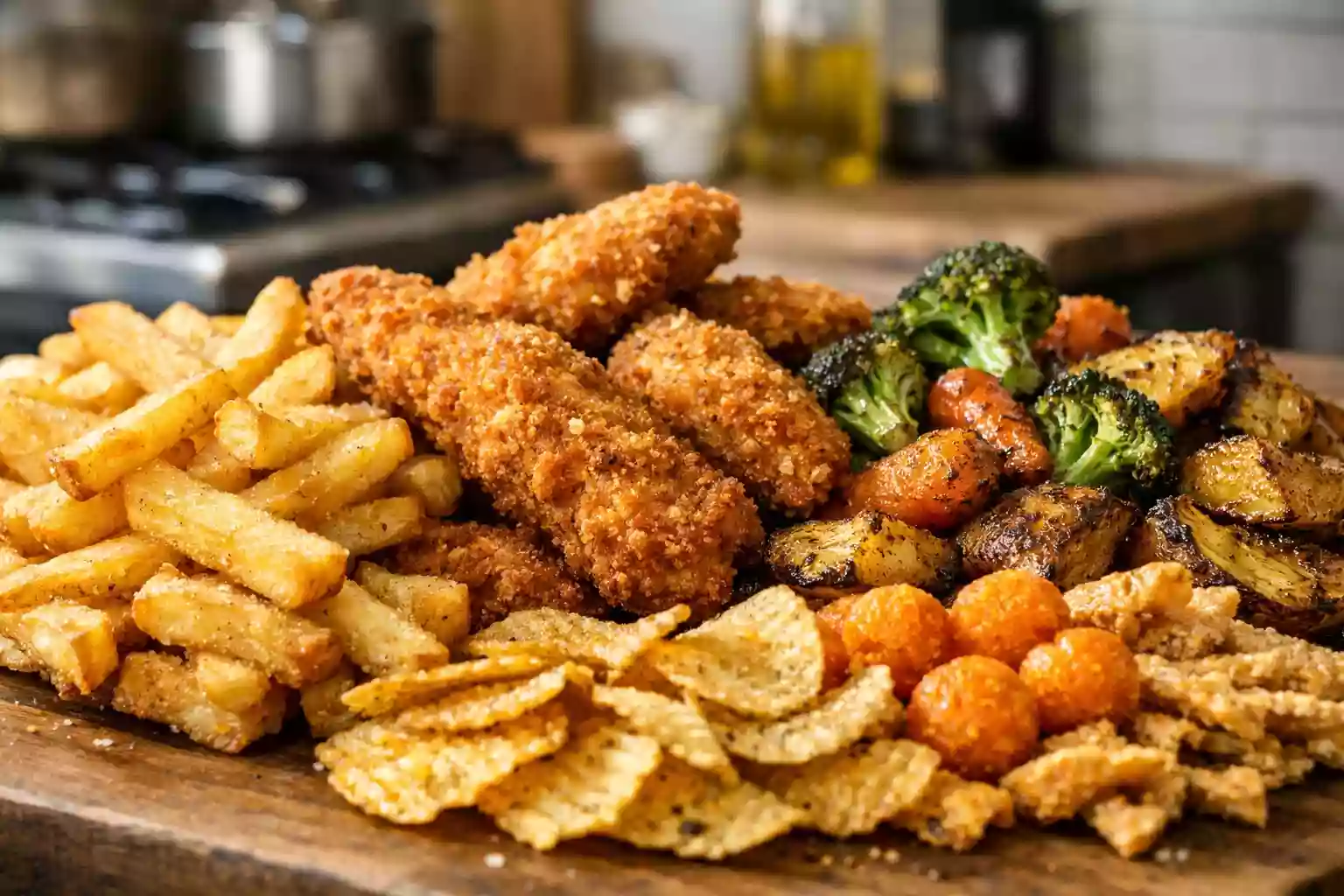
Here is what matters. Crispy texture comes from four forces: moisture, heat, starch, and airflow. When you understand how they interact, you stop guessing and start controlling crunch. This guide breaks it down in plain language, the way a good cook would explain it at the counter while the oven preheats.
I am writing this in the voice of Snack Sarah because crispiness is her playground. Air fryers, ovens, skillets, crumbs, coatings, retries until the crunch is right. This is exactly the kind of science that turns okay snacks into repeat favorites.
Let me explain.
What “crispy” really means
Crispy is dry on the surface and structured enough to shatter when you bite it.
That surface might be breading, skin, starch, or dehydrated vegetable fibers. The key is that water has been driven out and the remaining structure has hardened just enough to break cleanly.
If moisture stays trapped, food goes soft.
If heat is too low, it steams.
If airflow is blocked, surfaces stay damp.
If starch does not set, nothing locks into place.
Crispiness is not one trick. It is a balance.
Moisture: the enemy of crunch
Water is the biggest obstacle to crisp food.
Most raw foods are full of moisture. Potatoes, chicken, zucchini, tofu. When heat hits them, that water tries to escape as steam. If it cannot get out fast enough, it softens the surface instead of drying it.
That is why these steps matter so much:
Drying before cooking
Patting food dry is not busywork. It removes surface moisture that would otherwise turn into steam. Chicken skin, fish fillets, vegetables, even frozen fries benefit from this.
Less water on the surface means heat can start browning instead of boiling.
Salting at the right time
Salt pulls moisture out. Sometimes that is good. Sometimes it ruins crunch.
Salt vegetables early if you plan to squeeze or drain them, like eggplant or zucchini fritters.
Salt potatoes after frying or roasting, not before, unless you dry them again.
Timing controls where the water goes.
Thin layers win
Thick coatings trap steam. Thin, even coatings let moisture escape.
This is why light breading often crisps better than heavy batter in a home kitchen. Commercial fryers are powerful. Home ovens are not.
Heat: crisp needs confidence, not hesitation
Crisp food needs enough heat to do two jobs at once.
First, it must drive off moisture fast.
Second, it must brown the surface before the inside overcooks.
That only happens when the temperature is high enough.
High heat sets structure
When starches and proteins heat quickly, they firm up. That firm layer becomes the shell that later turns crisp.
Low heat gives water time to seep out slowly, keeping surfaces soft.
This is why soggy fries are almost always underheated fries.
Preheating is not optional
A cold pan or oven delays browning. Food sits, steams, and absorbs oil instead of crisping.
Always preheat:
- Ovens fully, not “almost there”
- Pans until oil shimmers
- Air fryers for a few minutes if the model runs cool
The first contact with heat sets the tone for the entire cook.
Finish hot, not warm
If you lower heat too much at the end, steam builds again. Crisp food should finish at the same or slightly higher heat than it started.
This is why reheating crispy food at low temperatures usually fails. It softens before it dries.
Starch: the quiet hero of crunch
Starch is what turns dry heat into structure.
When heated, starch granules absorb moisture, swell, then burst and set. Once they dry out, they harden. That hardened layer is crunch.
Why potatoes crisp so well
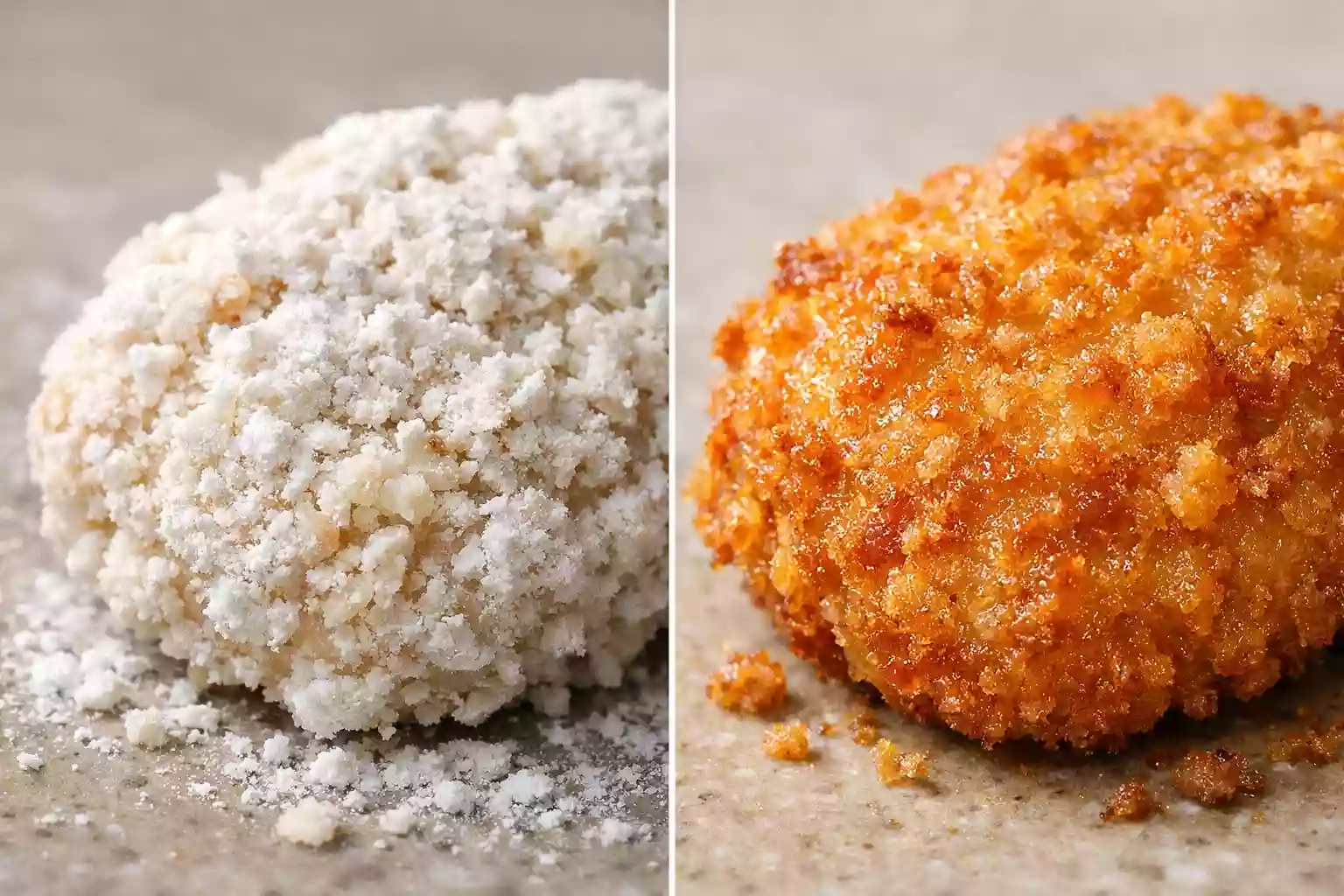
Potatoes are loaded with starch. When cut, rinsed, dried, and cooked hot, that starch forms a glassy shell.
Rinsing removes excess surface starch that would otherwise turn gummy. The remaining starch inside does the crisping work.
Flour, cornstarch, and crumbs
Different starches behave differently.
- Wheat flour browns well but can soften if too thick
- Cornstarch crisps fast and stays lighter
- Panko creates airy crunch because of its shape
- Rice flour stays crisp longer, even when cooled
Mixing starches often works better than using just one.
Why coatings need rest
Letting breaded food sit for a few minutes before cooking helps starch hydrate and stick. That prevents bare spots and peeling, which cause uneven texture.
This is not about flavor. It is about structure.
Airflow: the missing piece in home kitchens
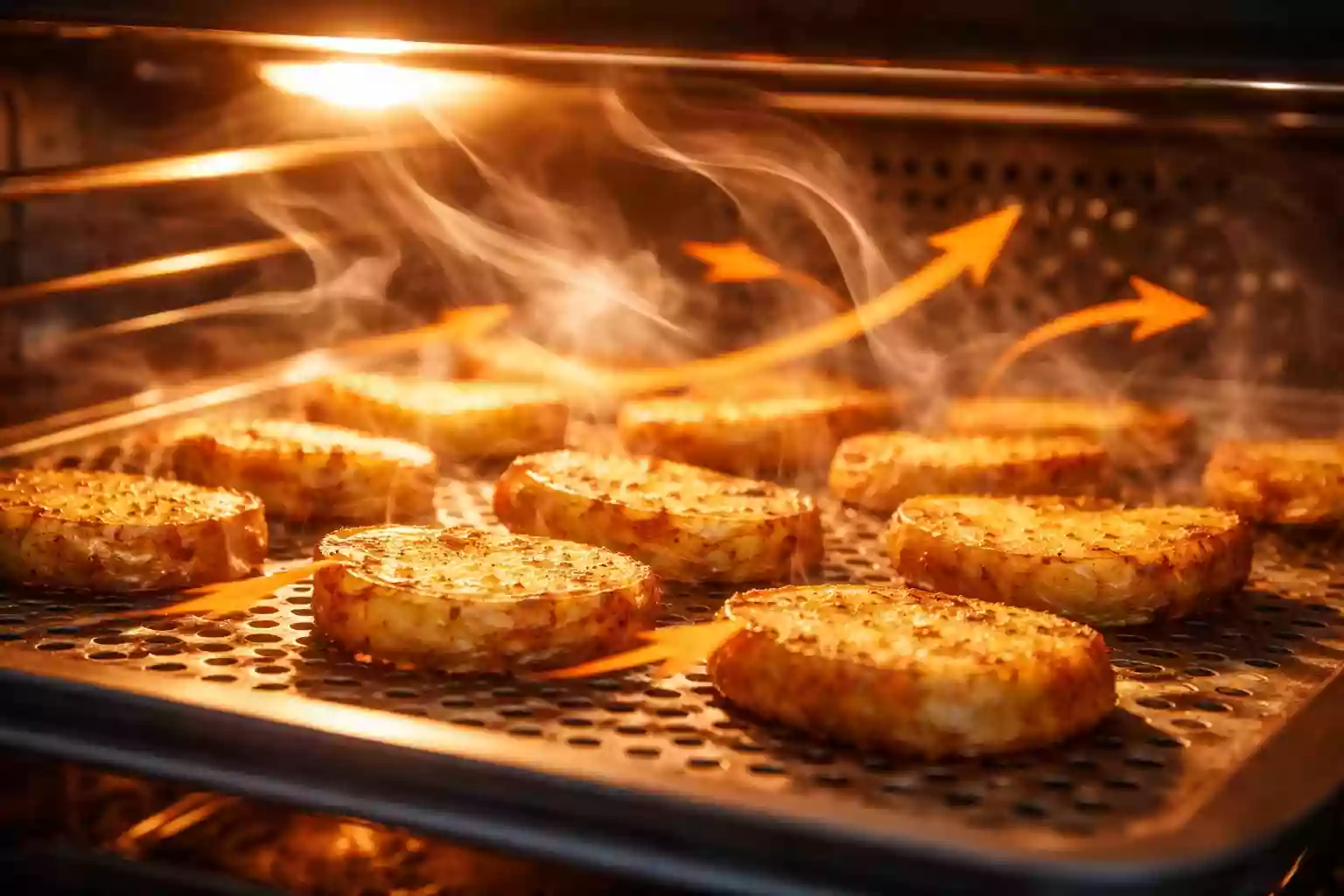
Airflow is why air fryers became popular. Not magic. Air.
Crispy food needs moving hot air to carry moisture away. Still air traps steam.
Why overcrowding kills crunch
When food touches or overlaps, steam has nowhere to go. Surfaces stay damp.
Spacing matters more than most people think. One crowded tray can undo everything you did right earlier.
Cook in batches. It is annoying. It works.
Elevation helps
A rack allows air to circulate underneath food. This prevents soggy bottoms and uneven browning.
Use racks for:
- Oven fries
- Baked chicken
- Reheating leftovers you want crispy again
Direct contact with a pan blocks airflow.
Turning is airflow too
Flipping food exposes a new surface to heat and air. That matters in ovens and air fryers where heat is directional.
If you want even crisp, you must rotate or flip.
Oil: not for greasiness, for heat transfer
Oil gets blamed for sogginess, but it is often the solution.
Oil conducts heat better than air. A thin layer helps surfaces brown quickly, sealing in structure before moisture escapes too slowly.
The mistake is using too much.
Thin, even coating
Toss, spray, or brush lightly. You want coverage, not puddles.
Excess oil lowers surface temperature and weighs down coatings. That leads to limp results.
Right oil, right heat
High smoke-point oils handle crisp cooking better. When oil breaks down, it interferes with browning and flavor.
This is not about health claims. It is about performance.
Why ovens, air fryers, and pans behave differently
Each cooking method changes how moisture, heat, starch, and airflow interact.
Oven
Even heat, limited airflow. Best for thin, spaced items and rack cooking. Needs higher temperatures and patience.
Air fryer
Strong airflow, fast moisture removal. Excellent for reheating and small batches. Crowding hurts more here than anywhere else.
Skillet or deep fry
Direct heat and oil contact. Fastest crisping, strongest structure. Requires attention and timing.
Understanding the tool lets you adjust the technique instead of blaming the recipe.
Common crisp killers and how to avoid them
Here is where most home cooks go wrong.
- Too much food at once
- Skipping drying steps
- Starting with low heat
- Using thick batters without enough heat
- Covering hot food immediately after cooking
Steam is relentless. Give it nowhere to hide.
Crisp that lasts vs crisp that fades
Some crisp is meant to be eaten immediately. Some lasts longer.
Long-lasting crisp usually comes from:
- Lower moisture foods
- Strong starch structure
- Airy coatings
- Higher initial heat
This is why crackers stay crisp and fries do not. The water content is completely different.
If you want crisp to hold for serving, choose techniques that fully dry the surface, not just brown it.
Why this matters for Easy Crispy Recipes
Understanding the science changes how readers trust your recipes.
You are not just telling them what to do. You are showing them why it works.
That builds confidence. It reduces failed attempts. It turns casual visitors into regular cooks.
This guide positions your site as more than a collection of instructions. It becomes a learning kitchen.
Final takeaway
Crispy texture is not mysterious. It is controlled moisture, confident heat, smart use of starch, and enough airflow to let steam escape.
Once you see it that way, every crispy recipe makes sense. You adjust instead of guessing. You fix problems instead of starting over.
That is how good snacks happen. Every time.
Snack Sarah is a recipe developer specializing in crispy snacks made for ovens and air fryers. She tests every recipe for texture and flavor, helping busy families and snack lovers create reliable, crunchy bites for any occasion.