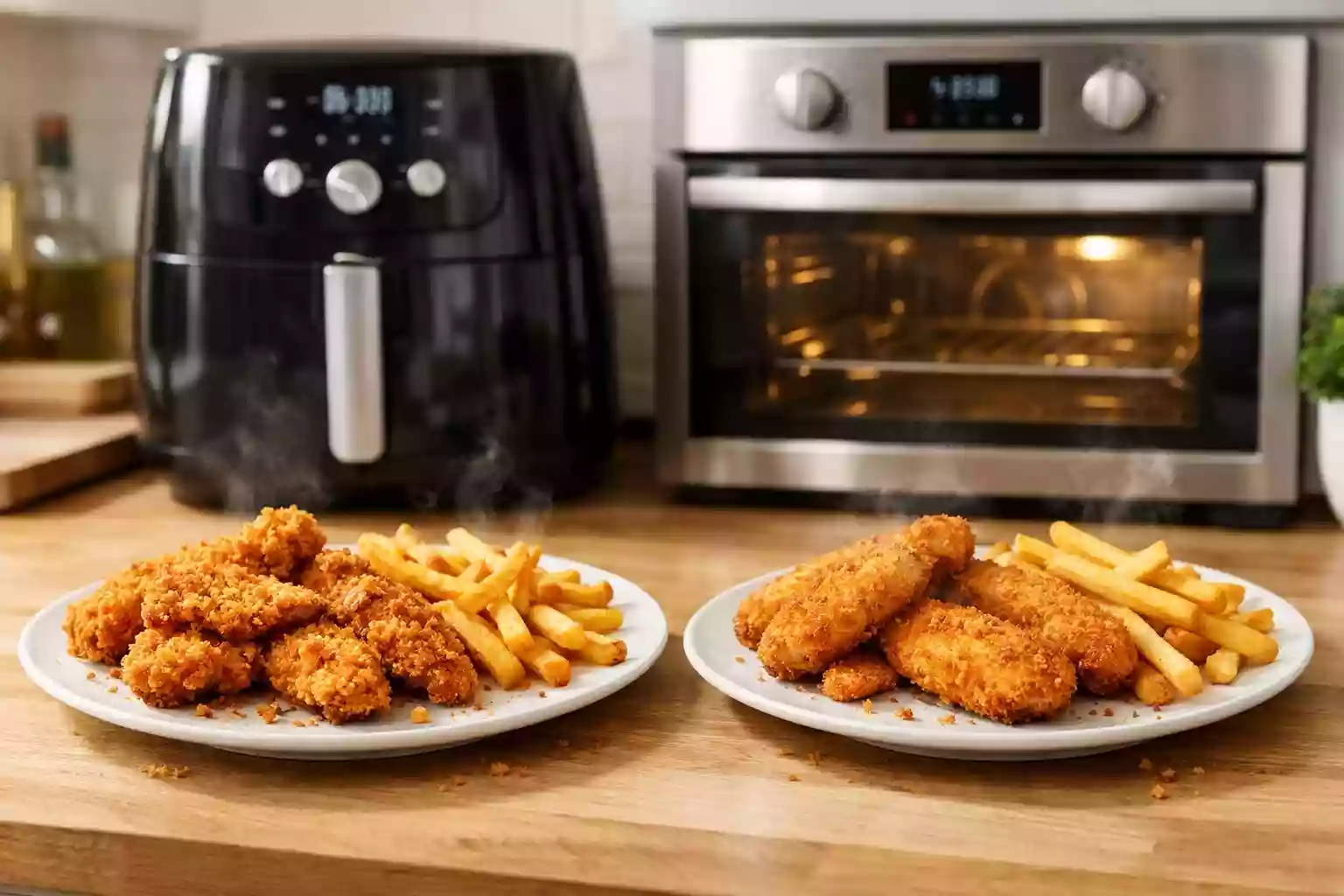
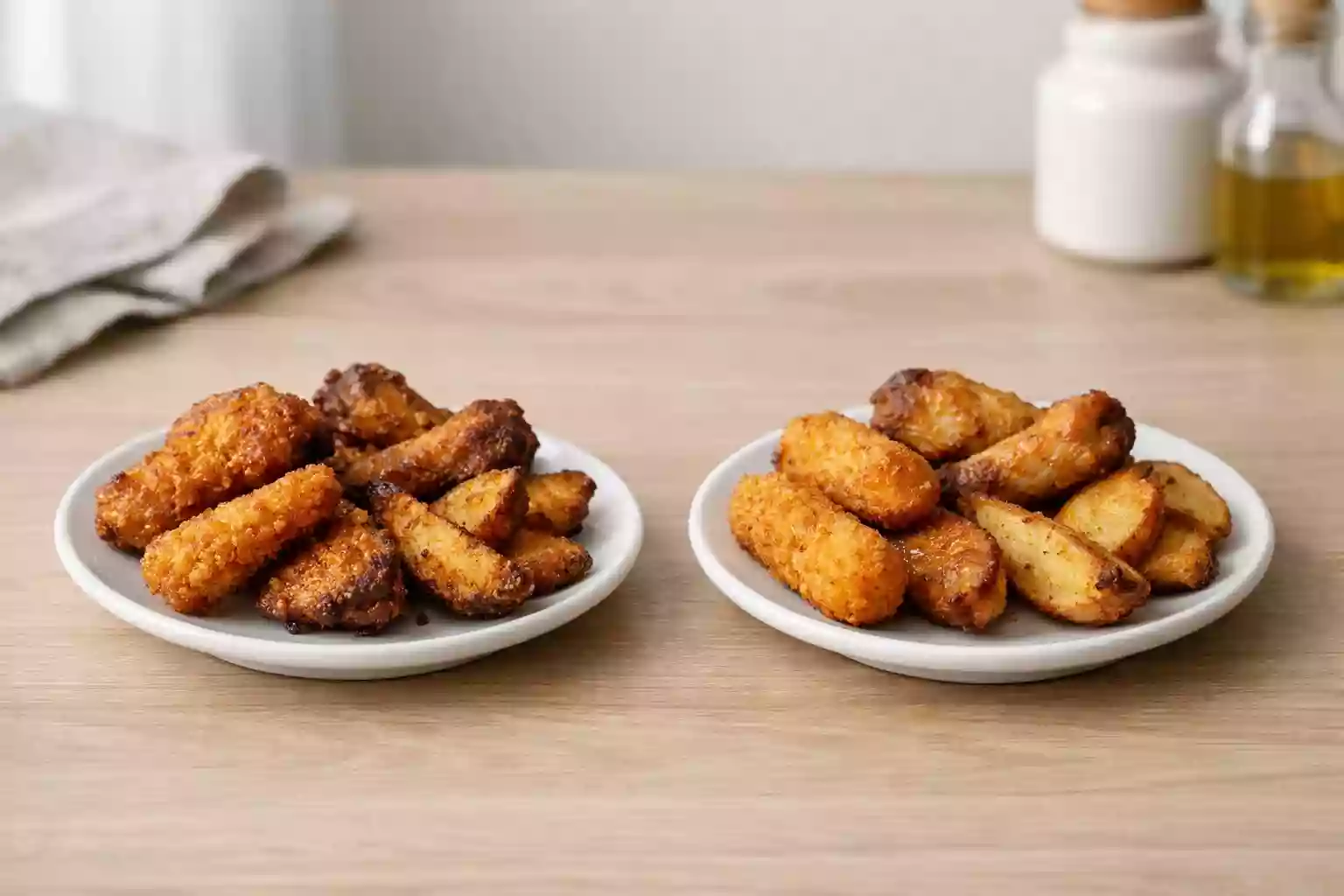
I’ve tested this more times than I can count. Same food. Same seasoning. Same oil. One batch in the air fryer. One in the oven. Then I line them up, break them open, listen, taste, and take notes.
Here’s what actually matters.
What “crispy” really means
Before comparing machines, let’s get clear on the goal.
Crispy is not just browned. It’s a texture created when surface moisture is driven off fast enough for sugars and proteins to react while the inside stays tender. That means three things are doing the work:
Heat intensity
Air movement
Moisture removal
Whichever appliance controls those better will win the crispiness contest.
How an air fryer actually works
An air fryer is a compact convection oven with attitude.
It blasts very hot air at high speed in a small chamber. The food sits close to the heating element, and the fan never lets heat pool in one spot. Moisture gets swept away almost instantly.
What that means in real life:
Food dries faster on the surface
Oil spreads thin and heats evenly
Browning starts sooner
Steam has less time to soften coatings
This is why air fryers are so good at mimicking deep-fried texture with less oil. They don’t give moisture a chance to linger.
How a standard oven works
A conventional oven is slower and more spacious.
Even with convection, heat has farther to travel. Air moves gently, not aggressively. Moisture hangs around longer before it escapes.
That isn’t bad. It’s just different.
Ovens excel at:
Even internal cooking
Larger batches
Foods that need gradual moisture loss
Thicker cuts that benefit from time
But for pure surface crunch, they need help.
The side-by-side test setup
To keep things fair, here’s how I test:
Same food
Same size cuts
Same oil amount
Same seasoning
No overcrowding
I preheat both appliances fully. No shortcuts. Crispiness hates shortcuts.
Foods tested repeatedly:
Frozen fries
Fresh potato wedges
Breaded chicken cutlets
Chicken wings
Roasted broccoli
Mozzarella sticks
Patterns show up fast.
Fries: air fryer wins, no debate
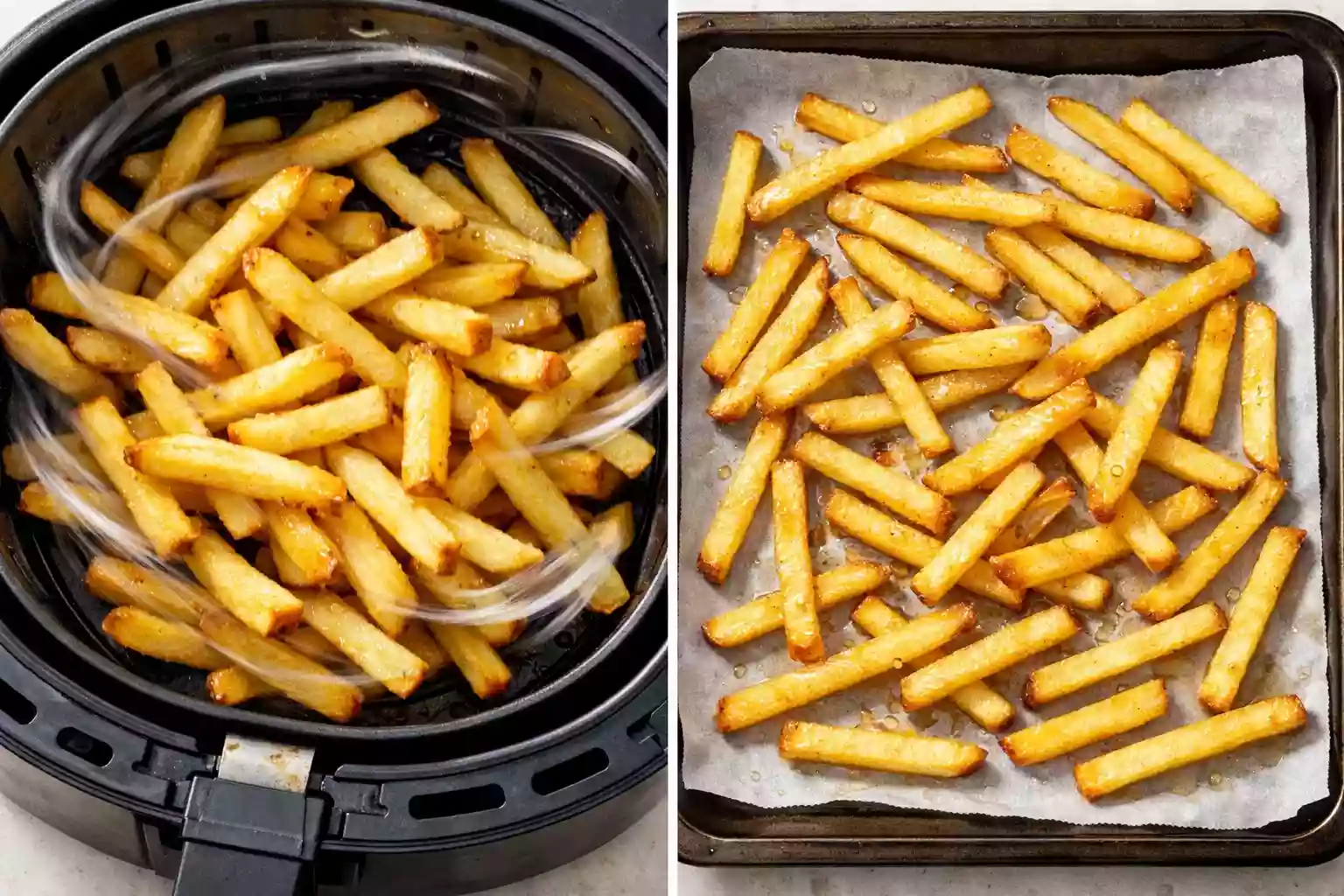
Frozen fries are designed to crisp quickly. They already have oil and a pre-fried exterior.
In the air fryer:
Surface dries fast
Edges blister
Interior stays fluffy
Shake once, done
In the oven:
Good browning, but slower
Softer centers for longer
Needs flipping
Needs more time
Oven fries can be good. Air fryer fries are consistently crispier in less time.
If fries are your priority, the answer is simple.
Fresh potatoes: depends on the cut
This one surprises people.
Thin cuts like shoestrings or thin wedges crisp better in the air fryer. The moisture leaves fast enough to avoid steaming.
Thicker chunks tell a different story.
In the air fryer, thick potatoes can brown before the inside fully softens. You end up with color without depth.
In the oven, thicker potatoes have time to soften inside while slowly building a crust. Tossed well and spaced out, they can get deeply crisp.
Bottom line:
Thin potatoes → air fryer
Thick roasted potatoes → oven (with patience)
Breaded foods: air fryer dominates
Anything coated in breadcrumbs, panko, or flour wants fast surface heat.
Chicken cutlets in the air fryer crisp evenly without soaking up oil. The coating stays light and crackly.
In the oven, breading tends to absorb steam unless you:
Use a rack
Flip carefully
Spray more oil
Even then, it rarely matches the air fryer’s snap.
If breaded crunch is the goal, air fryer every time.
Chicken wings: tie, with conditions
This one’s interesting.
Air fryer wings:
Fast skin rendering
Great crisp
Juicy inside
Limited batch size
Oven wings:
Excellent crisp if cooked long enough
Better for big batches
More forgiving
If you rush oven wings, they disappoint. If you give them time, high heat, and space, they get beautifully crisp.
Air fryer wings are easier and faster. Oven wings win when volume matters.
Vegetables: depends on moisture content
Low-moisture vegetables like broccoli, cauliflower, and Brussels sprouts crisp incredibly well in an air fryer. Edges char, centers stay tender.
High-moisture vegetables like zucchini or mushrooms can struggle in the air fryer. They release water fast and can soften instead of crisp if overloaded.
Ovens handle watery vegetables better because the moisture has more room to escape without steaming everything else.
Rule of thumb:
Dense vegetables → air fryer
Watery vegetables → oven with space
Cheese and delicate snacks: air fryer with control
Mozzarella sticks, spring rolls, samosas, and similar snacks crisp beautifully in the air fryer, but timing matters. Seconds too long and they split.
Ovens are gentler and more forgiving but less dramatic in crunch.
If you want bold crisp, air fryer. If you want safety, oven.
The oil factor
Crispiness loves oil, but only a little.
Air fryers need less oil because the fast air movement spreads it thin and heats it evenly.
Ovens often need more oil to compensate for slower moisture removal.
Too much oil in either appliance leads to sogginess. Thin coats always win.
Crowding changes everything
This is where many people misjudge air fryers.
Air fryers hate crowding. Stack food and you kill airflow. That turns crisp dreams into steamed reality.
Ovens tolerate crowding better, especially with convection, because space is larger.
If you regularly cook for families or parties, ovens keep their edge.
Speed vs control
Air fryers are fast. That’s their magic and their risk.
Fast browning leaves less room for correction. Miss the timing and you overshoot.
Ovens are slower but give you more control over internal doneness.
For snacks and quick meals, speed is a gift. For larger, thicker dishes, control matters.
Noise, heat, and practicality
Air fryers are louder. Fans work hard.
They heat kitchens less. Great for summer.
Ovens are quieter but heat the room. Fine in winter. Not fun in July.
These things don’t affect crispiness directly, but they affect how often you choose one over the other.
Energy use and consistency
Air fryers use less energy for small portions. They also produce more consistent results once you learn your model.
Ovens shine when used at scale. One tray or four trays barely changes energy use.
Consistency improves in ovens when you stick to racks, rotation, and proper preheating.
The real answer people don’t like
There isn’t one winner for everything.
But if the question is strictly:
Which makes food crispier most of the time?
The air fryer wins.
It removes moisture faster. It applies heat more aggressively. It was built for crisp texture.
The oven fights back with space, volume, and versatility.
When to choose the air fryer
You want maximum crunch
You’re cooking small batches
You’re making breaded or frozen foods
You want fast results
You don’t want much oil
When to choose the oven
You’re cooking large amounts
You’re roasting thick cuts
You’re working with high-moisture foods
You want gradual browning
You need more forgiveness
The smartest kitchens use both
This isn’t about loyalty. It’s about tools.
I use my air fryer for snacks, sides, and anything where crunch is the star. I use my oven when scale, structure, or slow roasting matters.
Crispiness isn’t magic. It’s physics, moisture, and heat. Once you understand that, the choice becomes obvious every time.
If your goal is that clean, shattering bite, start with the air fryer. If your food needs room to breathe and time to transform, let the oven do its thing.
That’s the real test-based answer.

Snack Sarah is a recipe developer specializing in crispy snacks made for ovens and air fryers. She tests every recipe for texture and flavor, helping busy families and snack lovers create reliable, crunchy bites for any occasion.